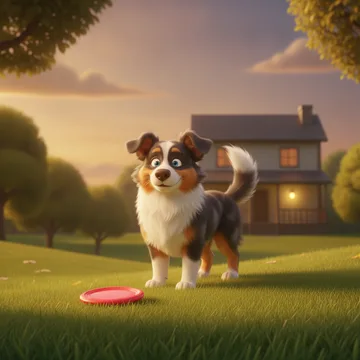
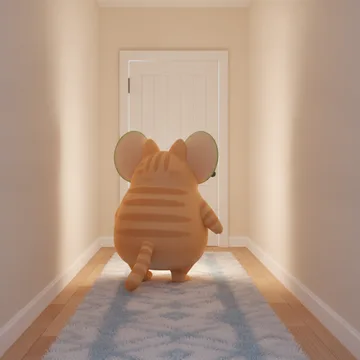
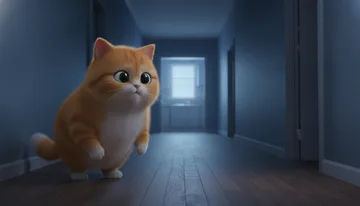
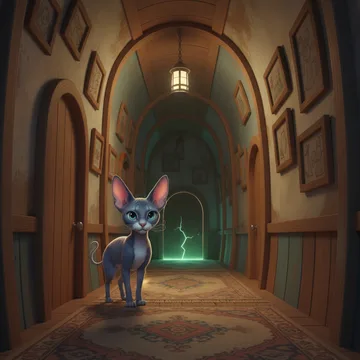
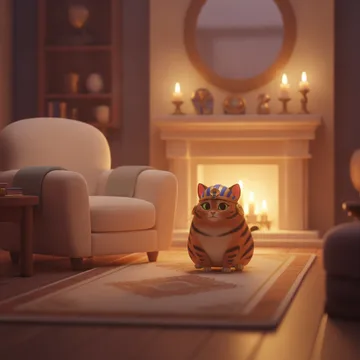
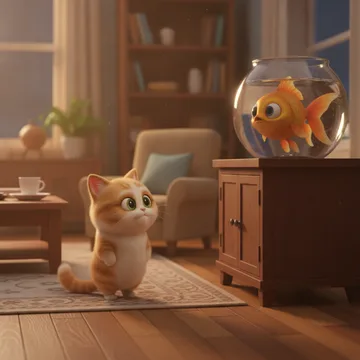
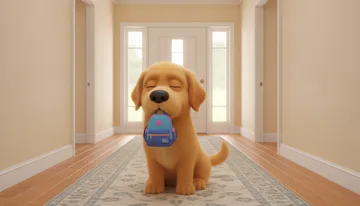
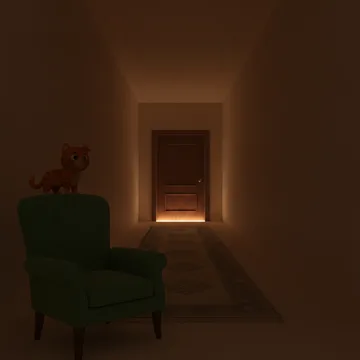
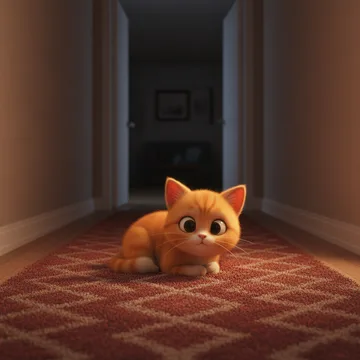
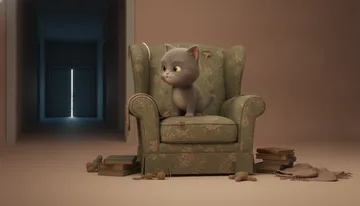
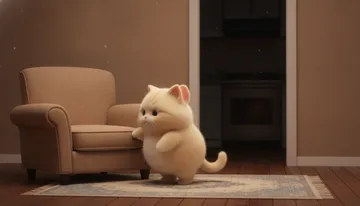
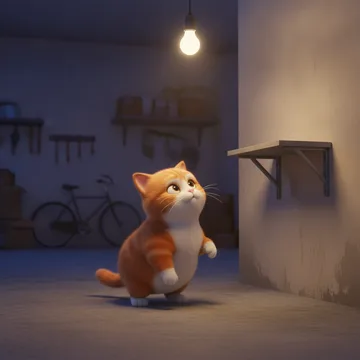
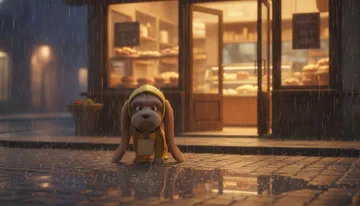
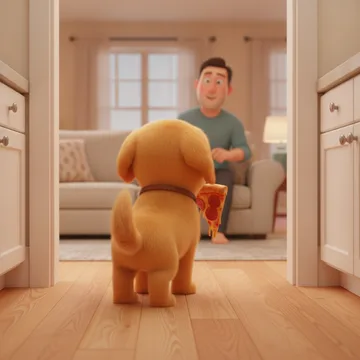
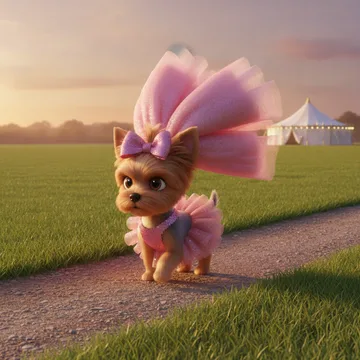
Wren sat in the hallway with one paw lifted and her nose working slowly, left to right. The house smelled of carpet and dinner and the particular dustiness of the bookshelf. And then — underneath all of that — something else. Something papery and cold and new.
Sniff, sniff, sniff.
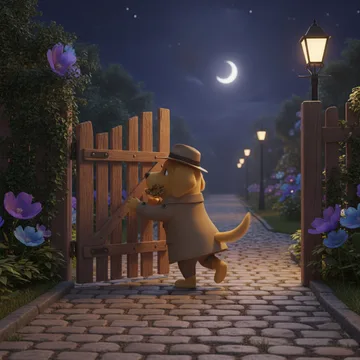
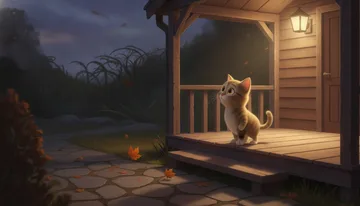
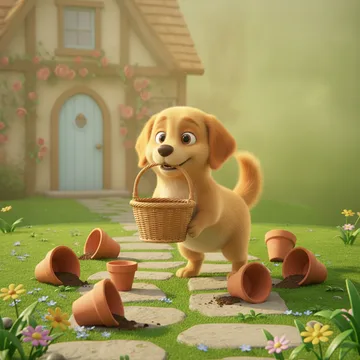
She followed it through the kitchen, past the recycling bin, all the way to the garden door, which was open just a crack. The cold air came through in a thin ribbon. Wren pressed her darker brown nose to the gap and breathed in. Yes. That was it. That was definitely it.
She nudged the door wider with her shoulder and stepped outside.
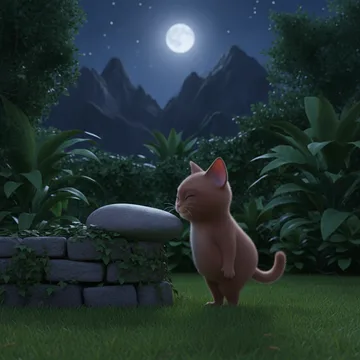
The rosebush by the wall was making a small scratching sound — not wind, not a bird, but a papery rustling, like something caught and struggling to get free. Wren picked her way across the damp grass on careful, deliberate paws. And there, snagged on a thorn, was a large white paper airplane. One wing was bent. The other pointed at the moon.
Wren looked at it for a long moment. Then she looked at its underside. Someone had drawn on it in pencil — a dotted trail winding past the flowerpots, under the bench, through the gap in the fence, and ending in a small circle in the middle of the lawn. A map. A proper one.
Sniff, sniff, sniff. The scent came from that direction. So that was where Wren would go.
By the flowerpots, she found a paper boat, folded very precisely, sitting upright on the stone edge. Its crease was sharp enough to cut. Wren sniffed it once and moved on.
Under the bench, half-hidden in a shadow, sat a paper bird with pointed wings and a beak like a triangle. One of its feet had been carefully folded into a tiny stand so it wouldn't fall over. Wren studied this detail with narrowed eyes. Whoever had made this was very thorough.
She squeezed through the gap in the fence — the wood was rough and cold against her ears — and came out onto the back lawn. The grass here was longer and slightly wet. And sitting in the very centre of it, in the round beam of moonlight, was a mouse.
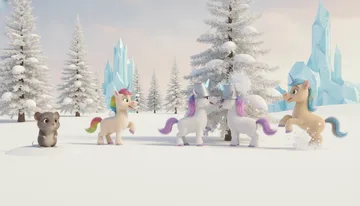
He was small and brown and surrounded by paper. A fleet of it — boats, birds, stars, squares — arranged in a careful circle around him. He had a piece of paper on his knee and was folding it with his whole body, tongue out, deeply concentrated. He looked extremely pleased with himself.
His name, it turned out, was Otis. Wren could tell because he had written it, in wobbly letters, on the side of the paper boat.
Otis looked up. He saw Wren. He did not run. He said, very solemnly, "The airplane escaped."
Wren sat down. She looked at the paper fleet. She looked at Otis. She looked back at the airplane she had carried under one paw all the way from the rosebush.
She set it down on the grass. She placed one deliberate paw on the bent wing and pressed — slowly, flatly, firmly — until the crease gave way and the wing was straight again.
Otis's eyes went very wide. He picked it up. He threw it as hard as a mouse can throw anything.
The airplane rose in a clean arc over the long grass, curved gently left, and landed without a sound on the stone path. A perfect flight.
Sniff, sniff, sniff. Case closed.
Wren turned and walked back toward the house, tail pointing straight up at the stars. She carried the paper star between her teeth — carefully, so as not to crumple it. Back inside, she settled on the mat by the garden door, tucked her paws underneath her, and set the star down just in front of her nose. Her whiskers twitched once. Then she gave a single, slow blink at nothing in particular.