Clementine the combine harvester rolled through the wheat field as the evening turned golden. Her big red body hummed and rumbled. Her front blades spun — whirr-whirr-whirr — and tall stalks of wheat bent forward and tumbled in, cut clean. The grain poured into her tank like a warm, rustling river.
She had been working since lunchtime. Row after row, back and forth across Barley Hill Farm. The farmer's family was waiting up at the house, and no bread could be baked — not one loaf — until Clementine brought home the last of the wheat. Whirr-whirr-whirr. Nearly there.
The sky went orange and pink at the edges. Clementine could smell the dry, dusty warmth of the cut stalks rising around her. Just the far corner left. She swung wide around the edge of the field, engine chugging, and that's when she saw it.
A tangle. An enormous, impossible, ridiculous tangle. Old hay bales had rolled and split apart. Fence wire had looped itself around everything. Bits of straw stuck out in every direction. The whole mess stretched right across her last uncut rows, end to end.
Clementine's blades ground to a stop. Chunk. She sat very still. The field went quiet except for a cricket, somewhere, who did not seem to understand the seriousness of the situation and kept right on chirping.
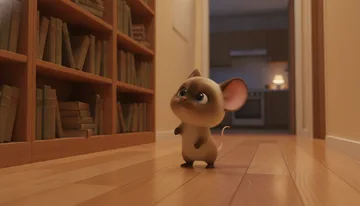
She leaned forward — creak — and looked closer. Something was moving in the middle of the tangle. Two small eyes blinked up at her. Then four more. Then six. A whole family of field mice, round and rumpled, staring up at the big red machine like she was the most surprising thing they had ever seen in their lives.
The smallest mouse sneezed. Whirr-whirr-whirr, thought Clementine. What does a combine harvester DO?
She had her blades, yes. But wire in her blades would jam everything for good. She had her big body, but the ditch ran along both sides — no going around. She thought about it for exactly four seconds. Then she smiled her big red smile.
She had her reel. The long rotating bar at the very front, the one that combed the wheat gently into her blades. She could set it slow. She could set it very, very slow. Slow enough to comb a tangle apart — carefully, piece by piece — like unknotting a giant heap of spaghetti.
Clementine switched her reel to the lowest setting. Click. It turned — soft and slow, nothing like its usual spin. She nudged it forward into the edge of the tangle.
The reel turned. A clump of hay lifted free. A loop of wire rolled itself sideways. A bale shifted. The mice watched with their small round eyes, noses twitching at the smell of engine oil and warm metal. Clementine worked patiently — nudge, comb, lift, roll — section by section until the tangle began to come apart.
Then the smallest mouse squeaked once, and the whole family skittered out through a gap in the straw and went bounding across the field toward the hedgerow. The wire coiled itself into a tidy ring. Clementine nudged it to the side with one slow, satisfied push.
The last rows of wheat stood waiting, gleaming in the last bit of light. Clementine fired her blades back up — whirr-whirr-whirr — and drove forward. The wheat came in. The tank filled. The sky went dark blue above the farm.
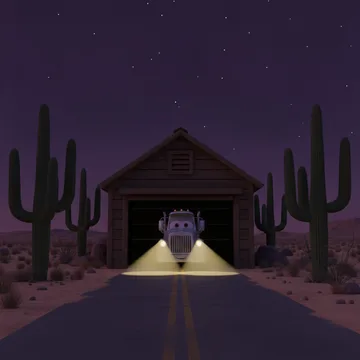
She rolled back to the barn slowly, heavy with grain, her engine ticking as it cooled. Tick. Tick. Tick. The barn door was wide open, and inside it smelled like wood and oil and old hay. Clementine rumbled in, eased to a stop, and went still. Dust settled softly around her wheels. The farm went quiet. The bread would be baked by morning.